
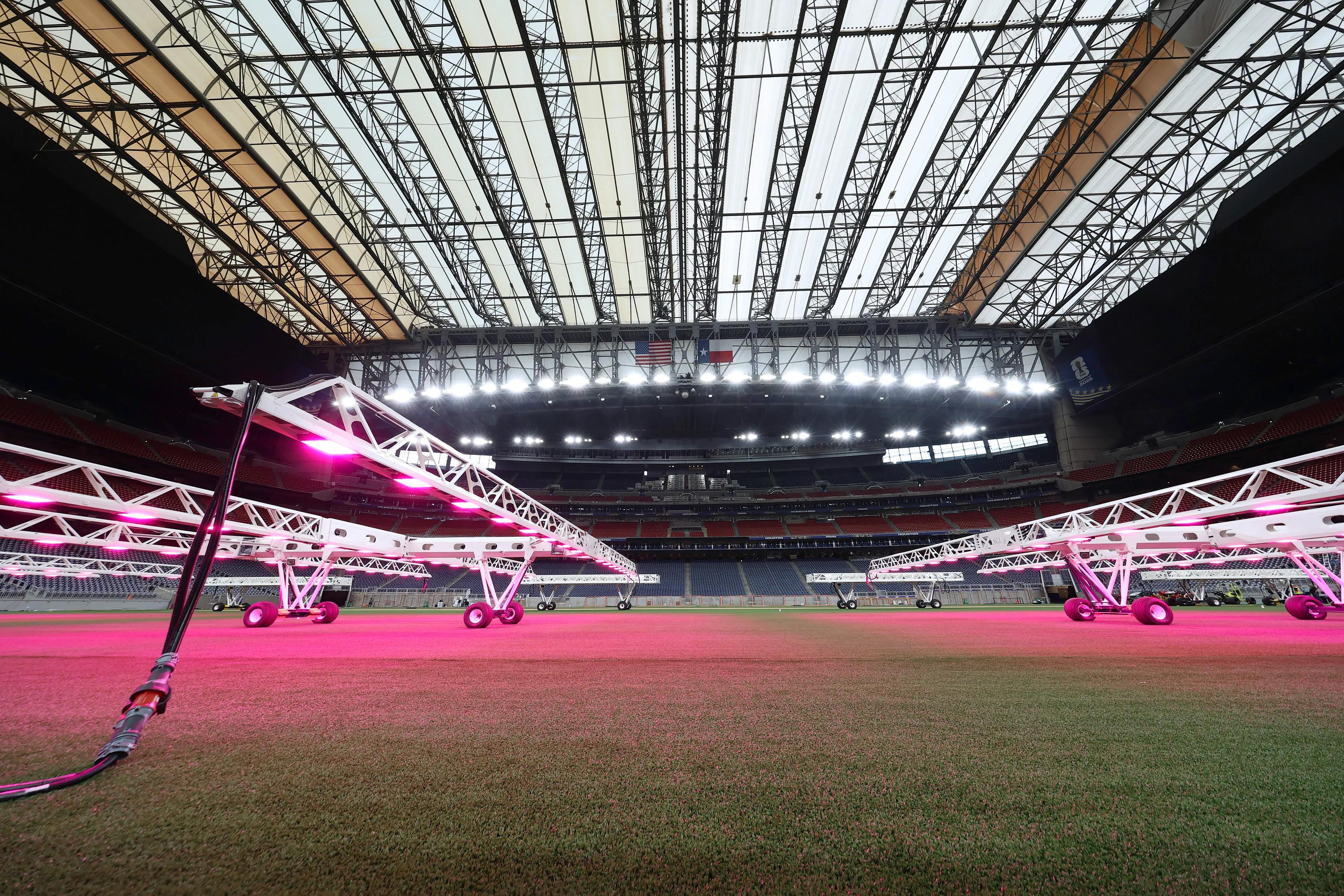
Just six days before the tournament kicks off in Mexico City, FIFA’s Pitch Management division has achieved a massive operational milestone. At precisely 2:30 PM on June 4, 2026, engineers completed the final layout of the natural grass playing surface at NRG Stadium in Houston.
Known inside the stadium logistics industry as the "Last Stitch," this event marks the official completion of the playing surfaces across all 16 host venues in the United States, Mexico, and Canada. It concludes an unprecedented, five-year agronomical and engineering project designed to standardize North American turf across vastly different climates.
Fans traveling to Houston: check crucial infrastructure footnote below for match-day transit guidance.
Bypass the Stadium Chaos
Join traveling fans getting instant, plain-English match-day and transit intelligence directly to their inbox.
⚡ 100% Free • No Chatbot Noise • Pure Operational Intel
Get Free Match-Day IntelligenceThe Engineering Feat Behind the Grass
To understand the scale of the "Last Stitch," one must look at the mechanical reality of Houston’s NRG Stadium. Normally a fully indoor, climate-controlled stadium featuring an artificial corporate grid, the venue required a total structural transformation to host its seven scheduled matches over the next 21 days.
=======================================================================
                    METRICS OF THE HOUSTON 'LAST STITCH'
=======================================================================

  [ Total Trays Installed ] ══> 1,250 individual modular natural grass sod units
  [ Depth of the Surface ]  ══> 12 inches of specialized rootzone sand and clay
  [ System Integration ]   ══> Vacuum-assisted root ventilation & drainage layers
  [ Performance Window ]   ══> Engine rated to absorb 4 inches of rain per hour

=======================================================================
The massive pitch conversion process is customized to create a pristine, highly consistent playing surface:
- Colorado Sod: The pitch is made of about 81,000 square feet of Kentucky bluegrass, which was grown for months on a specialized farm in Denver, Colorado, and shipped to Houston.
- Rapid Installation: Instead of taking the typical 10 to 12 weeks to construct the layers, turf, and irrigation systems, crews wrapped up the installation in just three weeks.
- Advanced Grow Lights: Because sunlight is limited inside the dome, workers are using specialized LED grow lights imported from the Port of Rotterdam to keep the natural grass healthy and match-ready.
Eliminating the "Two-Speed" Tournament
The primary objective of the multi-national Pitch Management project was eliminating variations in ball bounce, player traction, and surface friction. In previous tournaments spread across vast geographies, teams frequently complained of a "two-speed" competition, where damp coastal grass played completely differently than hard, high-altitude mountain turf.
By utilizing proprietary agronomical engineering, FIFA grew identical hybrid Kentucky Bluegrass and Ryegrass blends in highly secure, localized sod farms across North America. The modules installed in Houston are genetically matched to the pitches in New York, Kansas City, and Toronto.
For sports science teams and coaches, this guarantees absolute tactical predictability. Whether a squad is practicing at their Midwest base camp or stepping onto the pitch at NRG Stadium under a closed roof, the structural properties of the turf remain entirely unchanged.

Crucial infrastructure footnote:
The installation of natural grass has permanently altered stadium access. Because the field requires specialized vacuum and hydration logistics between matches, the immediate security perimeter around NRG Stadium has been widened.
🚌 Match-Day Transit Alert for Houston Fans
Traveling fans are strongly advised to utilize the METRORail Red Line directly to the Stadium Park/Astrodome Station to bypass the absolute highway gridlock expected on the Southwest 610 Loop during match days.
 The Hub Curator
Your consolidated checklist for a smooth travel experience as you traverse through the North America for FIFA World Cup 2026.
 The Hub Curator
Host Cities Intelligence at your fingertips when you need it!


